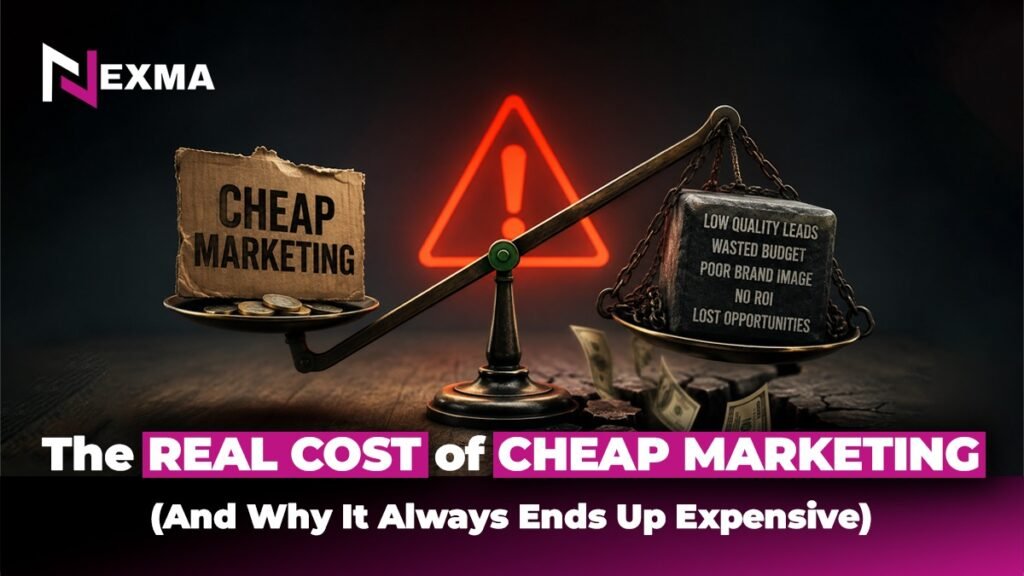
The Real Cost of Cheap Marketing (And Why It Always Ends Up Expensive)
That bargain deal that looked like a smart saving? Here’s the bill that arrives later and why ‘cheap’ is the most expensive word in marketing.
Cheap marketing is seductive. It promises the same destination for a fraction of the fare. The problem is what it quietly leaves off the invoice.
Every business owner has felt the pull. Two quotes land on your desk — one a fraction of the other — and the cheaper one whispers that you’d be foolish to pay more for “the same thing.” But it’s rarely the same thing, and the real cost of cheap marketing has a habit of showing up later, with interest.
This isn’t a pitch to overspend. It’s an honest look at where cheap marketing actually costs you — so you can spend wisely, not just spend less.
The Bill You Don’t See at Checkout
When you buy cheap marketing, the low price isn’t the whole cost — it’s just the part you can see. The rest arrives later: wasted ad budget spent on the wrong audiences, months lost to campaigns that were never set up to work, and the sales you never made because your marketing quietly underperformed the entire time.
That last one is the killer. The most expensive part of cheap marketing isn’t what you pay — it’s the revenue you never earned while it wasn’t working. That cost is invisible on any invoice, but it’s the biggest number of all.
Why Cheap Is Usually Cheap for a Reason
It’s often inexperience. A rock-bottom price frequently means someone learning on your budget — making the expensive mistakes on your money instead of their own.
It’s often volume over care. The cheapest providers survive by taking on far too many clients and giving each one a thin slice of attention. Your campaign becomes one of a hundred, not a priority.
It’s often templates, not strategy. Cheap work tends to be copy-paste — the same generic approach applied to your business as everyone else’s, with none of the thinking that actually drives results.
The Redo Tax
Here’s the pattern we see constantly: a business goes cheap, gets poor results, wastes months, loses budget, and then comes to a proper agency to fix it — meaning they pay twice. Once for the cheap version that didn’t work, and again for the real version that does. The bargain turned out to be the most expensive route of all.
Doing it right once is almost always cheaper than doing it badly and then doing it again. The redo tax is real, and it’s brutal.
What You’re Actually Paying For With Quality
When you pay for good marketing, you’re not paying more for “the same thing.” You’re paying for strategy that’s built around your specific business, experience that avoids the costly mistakes, attention from people who treat your budget like it matters, and accountability — a partner who owns the results instead of disappearing when they’re thin.
The difference isn’t cosmetic. It’s the difference between money spent and money invested.
How to Spend Smart (Not Just More)
Judge on return, not price. The right question is never “what does it cost?” — it’s “what does it bring back?” A more expensive option that returns several times its cost is far cheaper than a bargain that returns nothing.
Ask what’s included. Cheap quotes often hide their savings in what they leave out — strategy, tracking, optimisation, reporting. Compare what you actually get, not just the headline number.
Look for ownership. A partner willing to be measured on results is worth more than one who’s simply cheap and unaccountable.
The Bottom Line
Cheap marketing isn’t a saving — it’s a delayed, larger bill. The wasted budget, the lost months, the sales that never happened, and the eventual redo all add up to far more than you’d have spent doing it properly the first time. Spend wisely, judge by return, and treat marketing as the investment it is. That’s how you actually save money.
If cheap marketing has already cost you time, budget, or trust, you’re not alone — and it’s fixable. At Nexma, we build marketing that’s judged on return, not price. Let’s talk about doing it right, once.